
Pork Life Balance
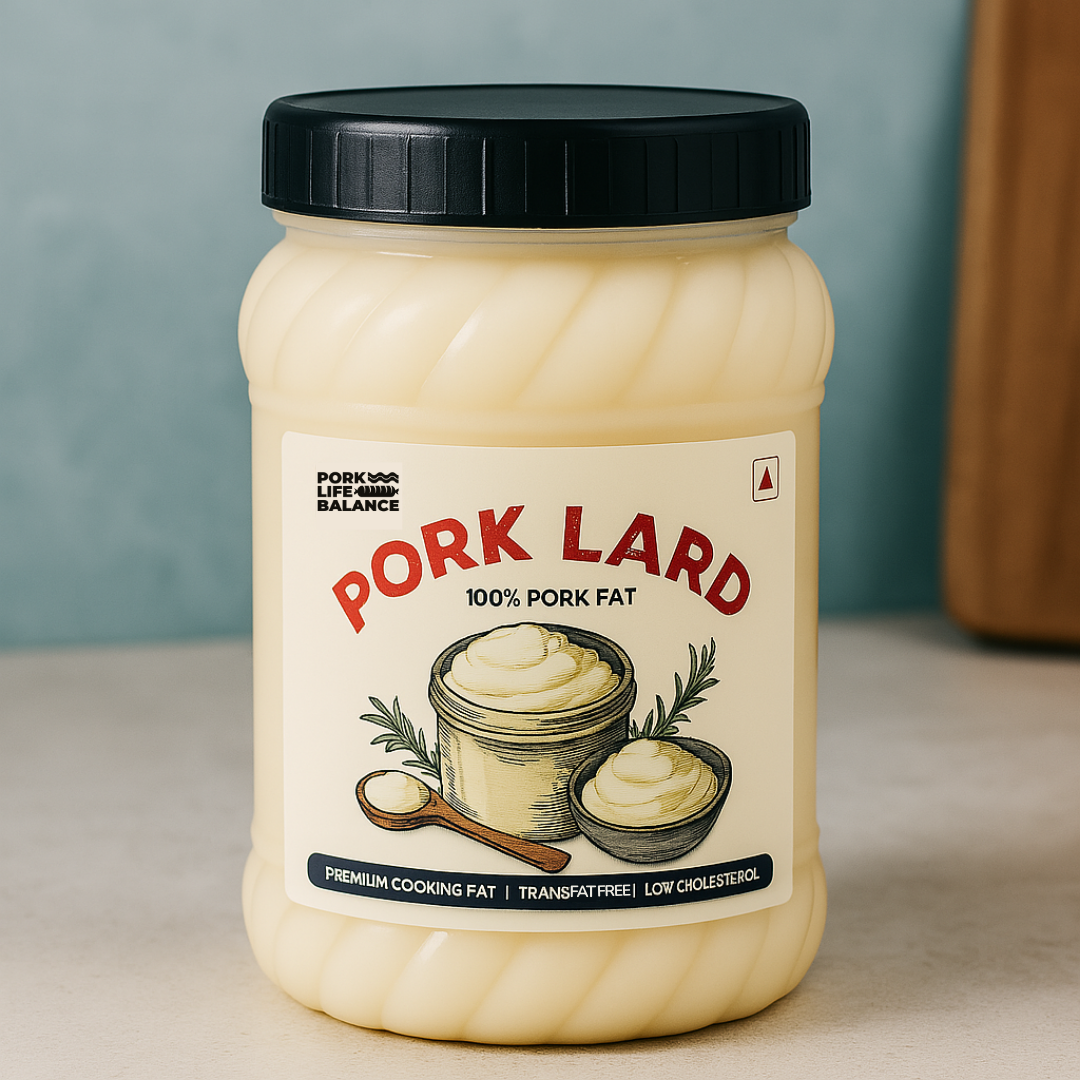
Pork Lard - Cooking Fat
Pork Lard - Cooking Fat
Cook, Bake, Fry - Savor the Pork Lard Surprise!
Couldn't load pickup availability
Shelf Life
Shelf Life
Unopened, cool & dry condition: 12 months
After opening: up to 6 months at room temperature in a sealed jar. Use a clean dry spoon each time.
Nutrition
Nutrition
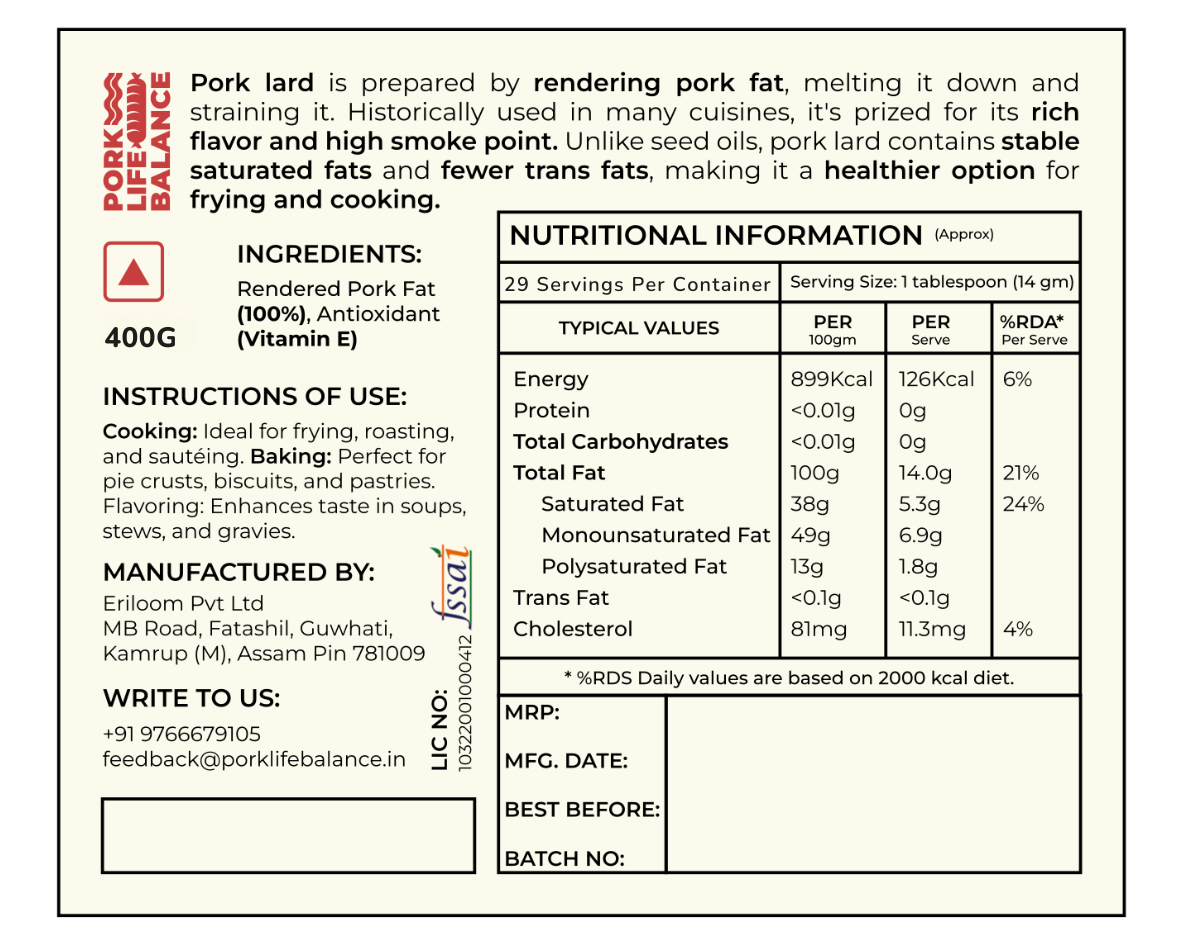
Per 100 gm
Energy: 899 kCal
Protein: <0.01 gm
Total Carbohydrate: <0.01 gm
Total Fat: 100 gm
— Saturated Fat: 38 gm
— Monounsaturated Fat: 49 gm
— Polyunsaturated Fat: 13 gm
Trans Fat: <0.1 gm
Cholesterol: 81 mg
Per Serving (1 tablespoon, 14 gm)
Energy: 126 kCal
Total Fat: 14.0 gm
— Saturated Fat: 5.3 gm
— Monounsaturated Fat: 6.9 gm
— Polyunsaturated Fat: 1.8 gm
Trans Fat: <0.1 gm
Cholesterol: 11.3 mg
Ingredients: Rendered Pork Fat (100%), Antioxidant (Vitamin E).
400 gm pack = approx. 29 servings.
How to Eat
How to Eat
Incredibly versatile, Pork Lard is ideal for cooking, baking, and frying, our pork lard takes your culinary creations from ordinary to extraordinary with its rich, buttery taste. Experience healthier and tastier cooking today!
Share your creations with us @plbsnacks
Product Information
Product Information
- Country of origin
- India
- Manufactured by
- Eriloom Private Limited
H.No.5, M.B Road, Fatashil,
Guwahati 781009, Assam - Net quantity
- 400 g / 700 g
- MRP
- ₹ 549 (inclusive of all taxes)
- FSSAI licence
- 10322001000412
- Customer care
- contact@plbsnacks.com
+91 88225 90866
Share
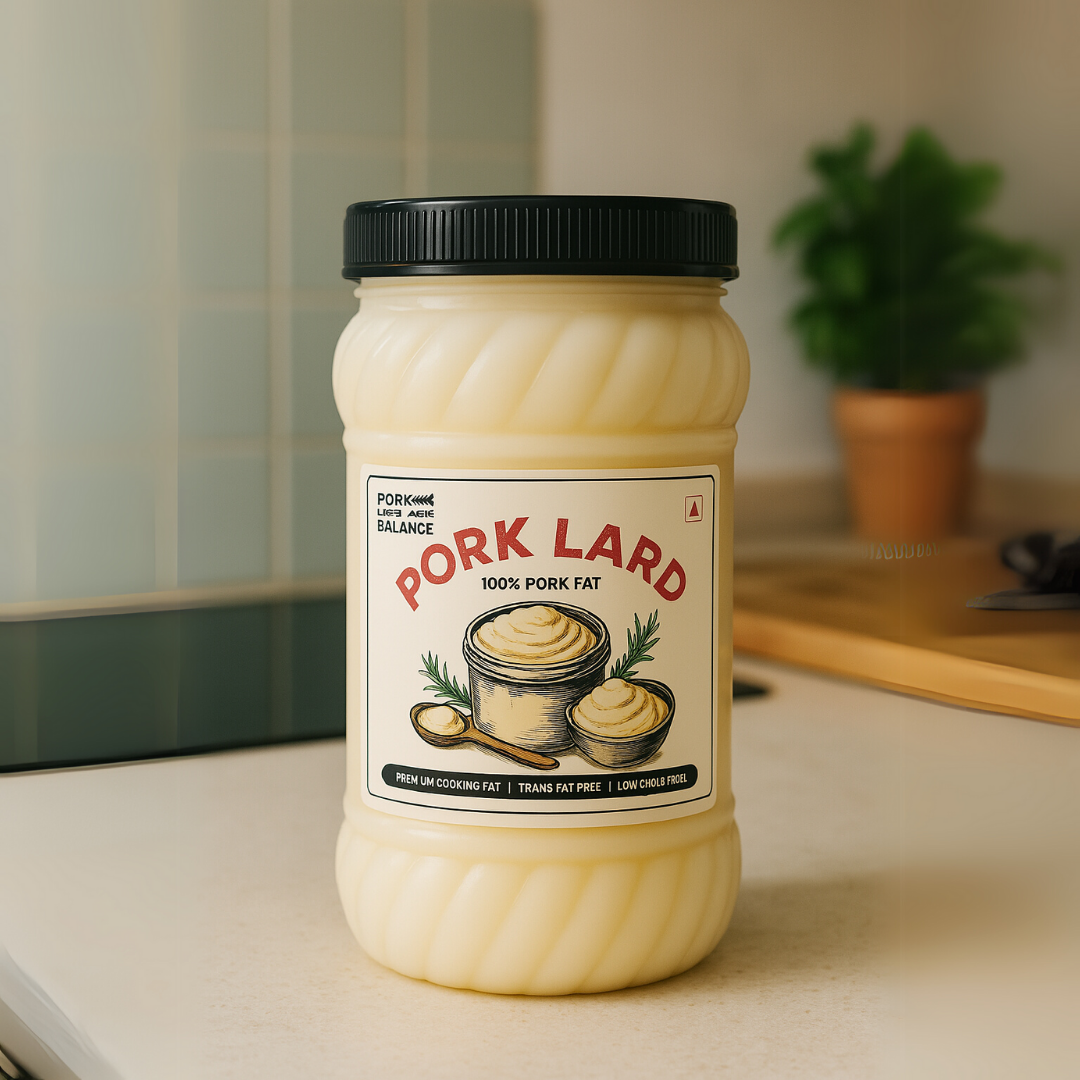
- Artisanal quality pork lard
- 100% rendered pork fat
- 0% Trans Fat
- Shelf-stable
- Gluten-Free
- Soy-Free
- No MSG or colorants added
What is PLB Pork Lard?
PLB Pork Lard is pure rendered pork fat for everyday Indian cooking. It is a monounsaturated-dominant fat: lab-tested at 49g monounsaturated, 38g saturated and 13g polyunsaturated per 100g, with under 0.1g trans fat. Its principal fatty acid is oleic acid — the same fatty acid that makes up the bulk of olive oil.
Single ingredient. No chemicals, no preservatives, no seed oils. The only addition is vitamin E as an antioxidant.
Slow-rendered in Guwahati, Assam, the way it has been made for generations. Smoke point ~190°C — ideal for high-heat Indian cooking: parathas, deep frying, tadkas, baking, roasting. Best for: flakier parathas, crispier pakoras, richer tadkas, and pie crusts that hold their shape. Use anywhere you would reach for ghee, butter, or refined oil — expect better results.
Per tablespoon (14g): 126 kCal, 14g fat, 6.9g monounsaturated, 5.3g saturated. A 400g pack holds roughly 29 tablespoons.
Unopened shelf life 12 months; up to 6 months at room temperature once opened. Available in 400 gm and 700 gm packs. Pan-India shipping, free above ₹700.
Switching from seed oils?
Start with one cooking session — the difference shows up in the first paratha.
Frequently asked questions
What is the fat profile of PLB Pork Lard?
Lab-tested, per 100g: 49g monounsaturated fat, 38g saturated fat and 13g polyunsaturated fat, with under 0.1g trans fat and 81mg cholesterol. Energy is 899 kCal per 100g. Pork lard is monounsaturated-dominant — its principal fatty acid is oleic acid, the same fatty acid that makes up the bulk of olive oil. Per tablespoon (14g) that works out to 126 kCal, 14g total fat, 5.3g saturated and 6.9g monounsaturated.
How many calories are in a tablespoon of pork lard?
One tablespoon of PLB Pork Lard (14g) contains 126 kCal and 14g of fat — 5.3g saturated, 6.9g monounsaturated and 1.8g polyunsaturated, with 11.3mg cholesterol and under 0.1g trans fat. A 400g pack contains roughly 29 tablespoon servings.
Is PLB Pork Lard suitable for Indian cooking?
Yes — pork lard is one of the best cooking fats for Indian kitchens. It handles high-heat tadka, deep-frying and slow simmering without breaking down, and its mild flavour lets your spices lead. We use it for tempering dals, frying pakoras and rolling out flaky parathas. PLB Pork Lard is made from cleanly-rendered pork fat with vitamin E as the only added antioxidant, so it works in any traditional Indian preparation.
What does pork lard taste like?
Pork lard is mild, almost neutral. Good lard should not taste porky — when rendered properly it carries a subtle savoury richness rather than a strong meat flavour. PLB Pork Lard is slow-rendered and filtered to keep that neutral profile, which is why it pairs well with vegetables, breads and even sweet preparations like pie crusts.
How is PLB Pork Lard made?
We source pork backfat from carefully selected farms, slow-render it over low heat for several hours, then filter it to remove any solids. No bleaching, no hydrogenation, no preservatives. The only added ingredient is vitamin E as an antioxidant. The result is a clean, off-white cooking fat that solidifies at room temperature and melts smoothly when heated.
How long does PLB Pork Lard last?
Unopened, PLB Pork Lard has a shelf life of 12 months stored in a cool dark place. Once opened, it stays fresh for up to 6 months at room temperature in a sealed jar, or longer refrigerated. Use a clean dry spoon each time to avoid introducing moisture.
Is pork lard healthier than refined cooking oils?
Pork lard is monounsaturated-dominant — 49g monounsaturated against 38g saturated per 100g — with under 0.1g trans fat. Many refined vegetable oils are high in omega-6 polyunsaturated fats and undergo heavy processing with solvents and high heat. For high-heat Indian cooking, traditional fats like lard, ghee or coconut oil are more heat-stable than refined seed oils. As with any cooking fat, quantity matters.
What is the smoke point of PLB Pork Lard?
Around 190°C, which is high enough for deep-frying, searing and high-heat tadka without the fat breaking down. That is comfortably above the smoke point of unrefined olive oil and butter, and is why lard holds up in Indian cooking where many oils do not.
Best hai bro
I now use the lard to cook bacon, fry eggs and just about for everything and it adds to the taste. The fat also helps with my satiety when compared to seed oils. Keep going, Team PLB.
Great product for cooking in stainless steel. Since its animal fat, once heated stainless becomes entirely non sticky. Not sure if to refrigerate or not, storing instruction should have been on the label.
I was pleasantly surprised at how coming in pork lard turned out... it's fresh and top of the order stuff. Glad I ordered from you guys.
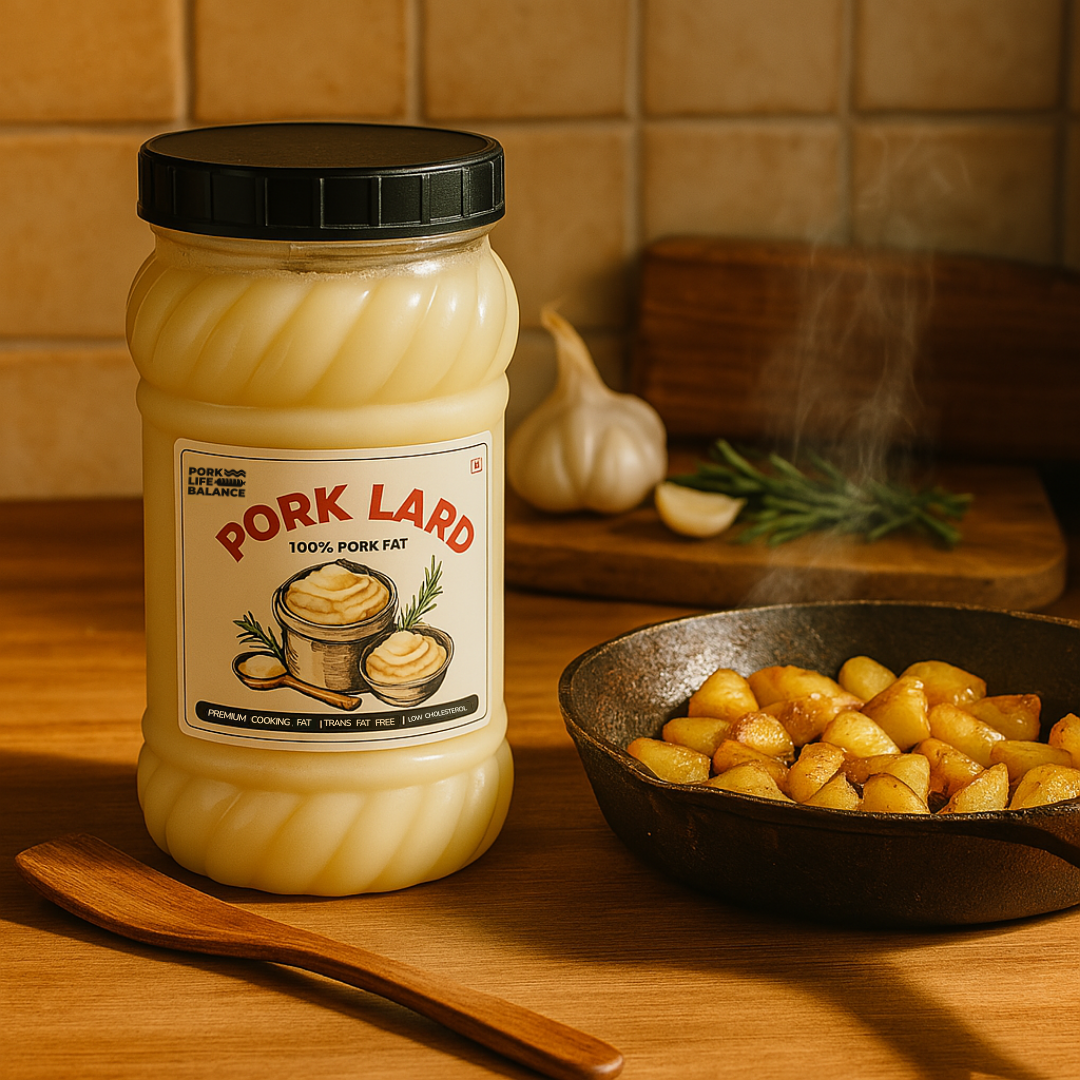
The Pork Lard seems very legit, it is pure and wayyy better than seed oils. I use it for frying my potatoes and my french fries turn out way tastier than normal.
Highly recommended and lard is an amazing alternative to cooking oils too!
PS: Please introduce a bigger packaging like a 1L bottle for us to get a better deal.
Cooking With Pork Lard
Pork lard — rendered pig fat — is one of the oldest cooking fats in the world, and it is quietly returning to Indian kitchens as cooks look past heavily refined seed oils. PLB renders ours slowly over low heat in Guwahati, Assam, then filters it. One ingredient, plus vitamin E as an antioxidant. Nothing else.
What makes lard different from other fats
Lard is monounsaturated-dominant, which is unusual among animal fats — 49g monounsaturated against 38g saturated per 100g. That composition is also why it behaves the way it does in the kitchen: it stays softer than tallow or butter at room temperature, and it coats flour proteins in a way that produces a short, tender, flaky crumb. If you have ever wondered why old pastry recipes call for lard specifically, that is the reason.
Where it performs best
Its smoke point of around 190°C sits comfortably above the temperatures most Indian cooking reaches, so it handles tadka, deep frying, pakoras and samosas without breaking down. Well-rendered lard is also close to flavour-neutral — it should not taste porky — which means your spices lead rather than compete. That neutrality is what makes it work equally well in a laccha paratha and a pie crust.
How to use it
Use it anywhere you would reach for ghee, butter or refined oil. Replace a teaspoon of ghee in paratha dough for flakier layers. Heat it before the cumin and mustard seeds for tadka. Swap it 1:1 for butter in biscuits and shortbread. Coat potatoes or bhindi before roasting. For a full walkthrough, read our guide to seven everyday ways to use pork lard in Indian cooking, or compare it against beef tallow.
How we make it
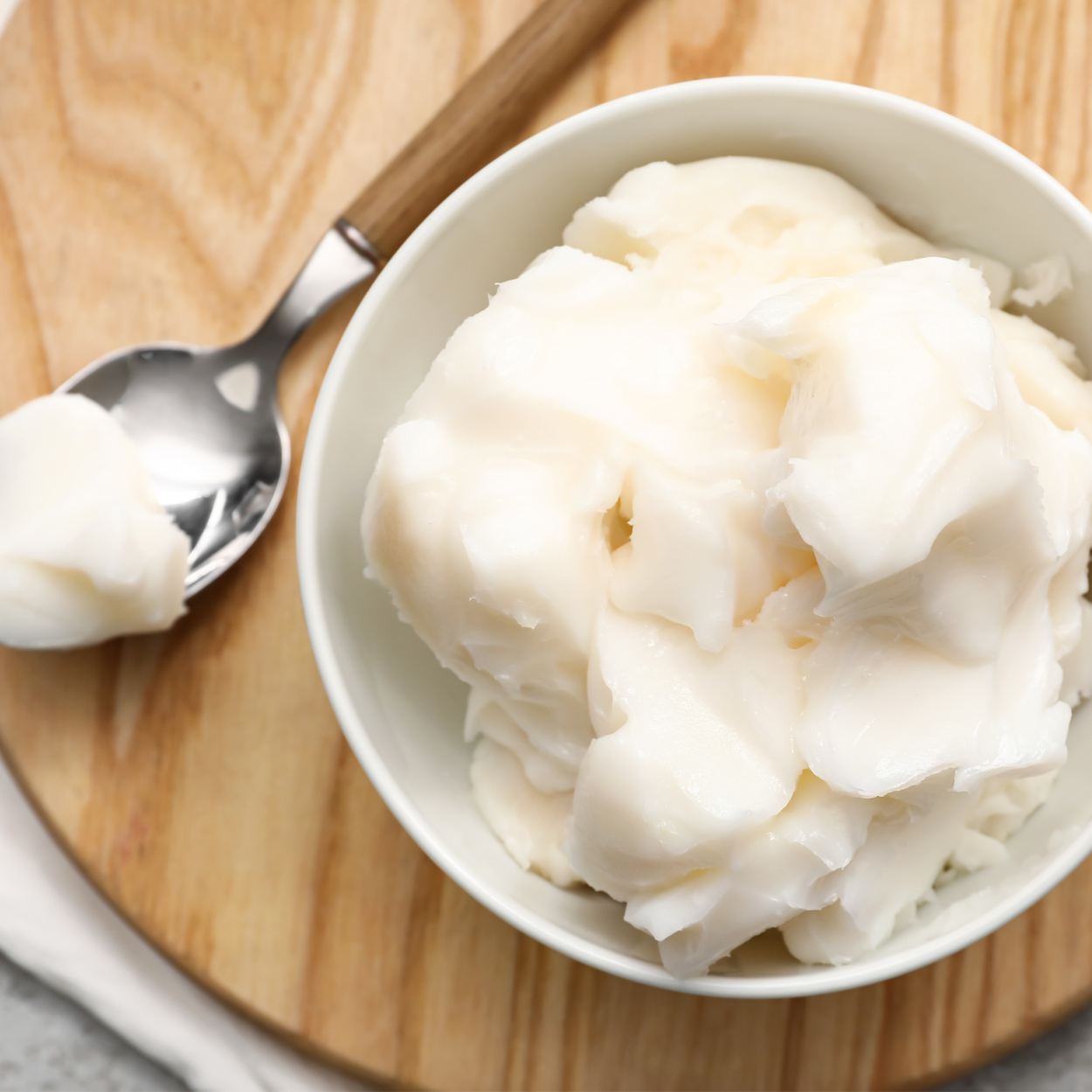
We source pork backfat from carefully selected farms, render it slowly over low heat for several hours, then filter out the solids. No bleaching, no hydrogenation, no preservatives. The result is a clean, off-white fat that sets firm at room temperature and melts smoothly in the pan.
Explore the rest of the range
PLB makes more than lard. Pork Crackle is crunchy pork skin in seven flavours, with 55g of protein and under 1g of carbohydrate per 100g. Pork Bites are dry-cured pork sausages aged 21 days, in four globally-inspired profiles. Both are made in the same Guwahati facility.