Crispy Paratha with Pork Lard — 15 Minutes, 3 Ingredients
Share
There's a reason your grandma's paratha tasted better than the one at your neighbourhood dhaba. It wasn't just technique. It was the fat.
Most cooks today reach for ghee or refined oil. They work — but they don't crisp the way real rendered pork fat does. Pork lard hits the dough at a higher smoke point than ghee, releases water faster, and creates the lacy, blistered, shattering crust that puffs up like a balloon when you press it.
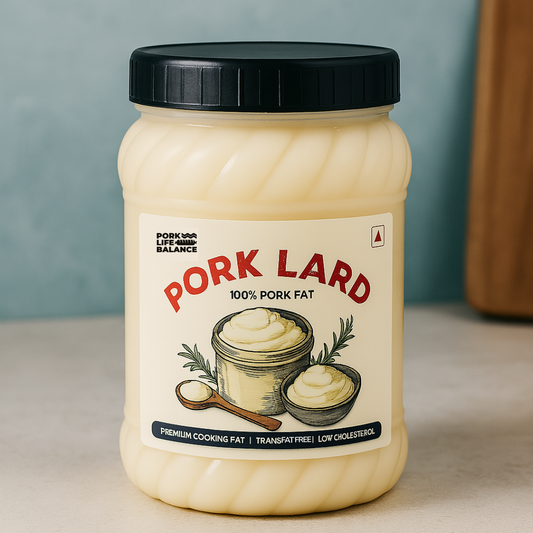
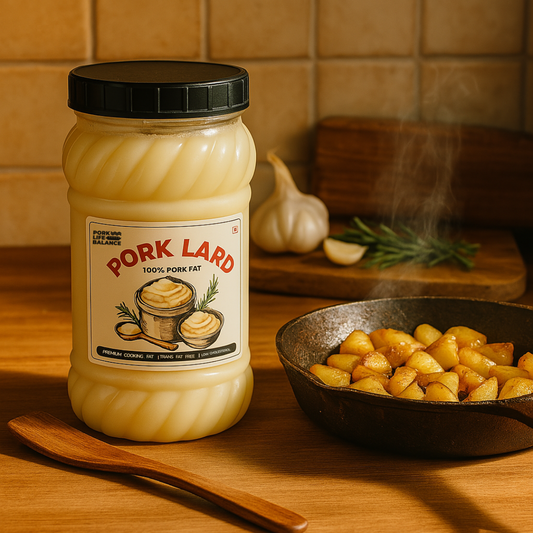
We've been quietly recommending PLB Pork Lard to cooks who ask "what's your secret?" for two years. Here's the simplest version.
What you need
- 1 cup atta (whole-wheat flour)
- ½ cup water (warm)
- Pinch of salt
- 2 tablespoons PLB Pork Lard (room temperature)
That's it. No yeast, no fancy fat, no oil pool.
What you do
Step 1 — Knead. Combine atta, salt, and water. Knead 3 minutes until smooth. Rest 5 minutes covered with a damp cloth.
Step 2 — Roll and lard. Divide into 4 balls. Roll one ball into a 6-inch circle. Smear 1 teaspoon of lard across it. Fold like a samosa cone (or roll into a tight log and coil). Roll out again into a 7-inch round.
Step 3 — Cook. Heat a tawa or heavy pan on medium-high. No oil in the pan. Slap the paratha on. After 30 seconds, flip. Brush ½ teaspoon of lard on the cooked side. Flip back. Press the edges with a spatula. You'll hear it crisp.
Step 4 — Serve hot. With dal, with curry, with chai. Whatever. Just eat it within 60 seconds of coming off the heat. That's when it's at its best.
Why this works
Pork lard renders cleaner than butter. It has the perfect ratio of saturated-to-unsaturated fat to hold layered crispness without becoming greasy. Indian home cooks used to use it before vegetable oil became culturally dominant in the 70s — what your great-grandparents called "white ghee" was often clarified lard.
We're not bringing it back as a fad. It just works.